
This Year’s Theme
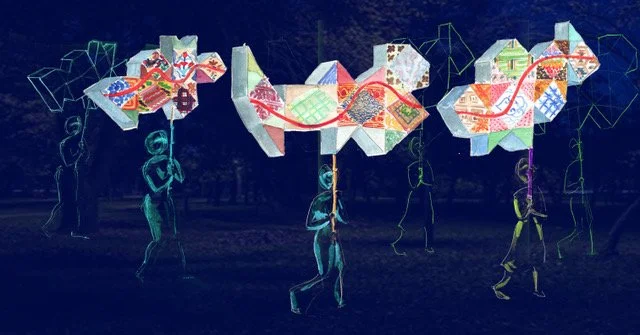
“A COMMON THREAD”
Concept and Direction by Processional Arts Workshop
Alex Kahn and Sophia Michahelles
artistic directors
Artists statement
"No pattern is an isolated entity. Each pattern can exist in the world, only to the extent that is supported by other patterns: the larger patterns in which it is embedded, the patterns of the same size that surround it, and the smaller patterns which are embedded in it.”
― Christopher W. Alexander, A Pattern Language
Look around. How many patterns do you pass by every day? What shape or image – arranged, repeated, and arrayed through space or time – conjures a memory, association, or cultural inheritance for you?
For this year's Morningside Lights: A Common Thread, we delve into the fabric of iconic patterns, decorative motifs, and recurring images that surround us – in woven and printed textiles, in personal and domestic adornments, in architectural and engineered spaces. While some patterns meld into the rhythm of everyday life, others reveal sacred geometries or cultural connections that transport us out of the present into the timeless. In their endless juxtapositions and recombinations, such patterns reveal the patchwork stories of a pluralistic city and nation, made anew with every generation.
In workshops from September 12–18, we will stitch together an eclectic grab-bag of scraps and samples into a vast luminous quilt of many colors. Just as traditional quilters collected old fragments to make something new, we are calling on the Morningside Lights community to gather the patterns that matter most to them. We invite suggestions from far and near, past and present –West African Kente cloths and Japanese Wagara prints, Turkish kilims and teen Kandi beads, Greek temple friezes and Tribeca tin ceilings, Andean aguayo weavings and underground graffiti walls. Drawing from personal experience or adopting crowd-sourced images from the "idea wall," workshop participants will assemble luminous patterned panels into a series of lanterns inspired by the geometry of American quilts. A winding red line will link one pattern to the next, running throughout the final procession – a common thread that connects the human fabric across our rich and varied differences.